
Israel’s Strategic Seizure: Castle Conundrums and Expanding Frontiers 🕍🌍
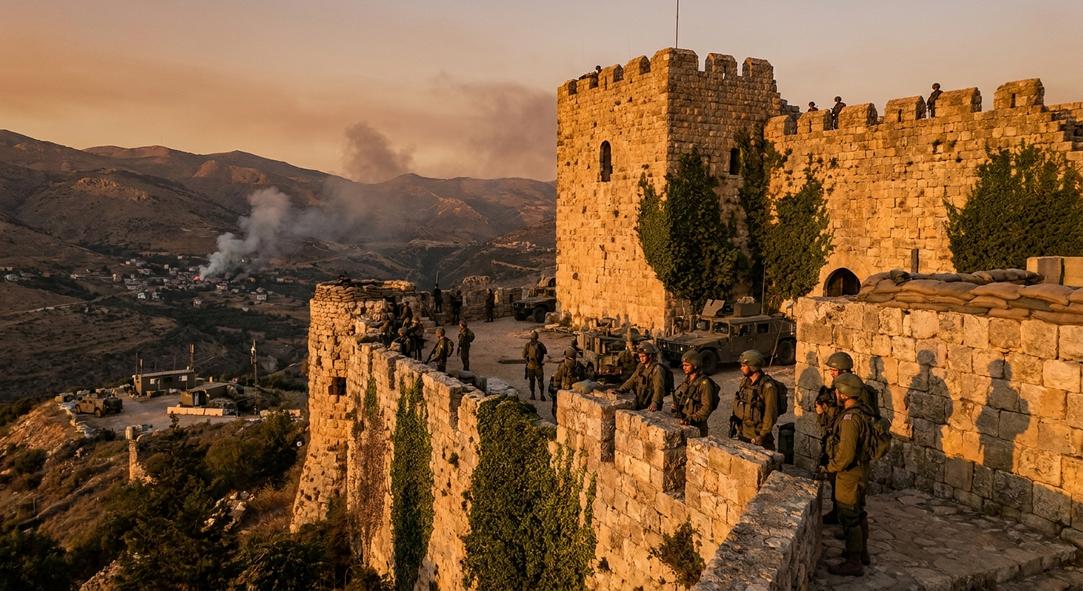
Like a page torn from a medieval chronicle, the news of Israel seizing a castle in Lebanon adds a historic twist to a modern confrontation. This latest move in the longstanding and complex dance of political and military strategy in the Middle East has left analysts and laymen alike pondering: Is this an echo from a bygone era of feudal fortifications, or a cunning stroke in contemporary geopolitical chess?
The castle, a tangible relic of history, now finds itself at the heart of present-day tensions. It’s as if a stone giant from antiquity has awoken to find itself amidst the buzzing complexities of modern warfare and diplomacy. The irony is bittersweet – a place built for defense now serves as a focal point for an aggressive expansion.
The Dance of Power and Territory
Israel’s ground offensive, an assertive push that seems to straddle both strategy and spectacle, evokes an image of waves crashing against stubborn rocks 🌊🪨. Each advance is a ripple, shifting the precarious balance of power that defines the region’s intricate and longstanding conflicts.
Yet, in this chessboard of the Middle East, where every square holds a story older than the written word, the castling maneuver by Israel is a striking antithesis to peace talks that have long been trapped in inaction. As if the very concept of negotiation had been shackled, anchored like a tired sentry to a post, while the world watches – waiting, hoping for resolution or perhaps even a miracle.
A Tactical Paradox
Interestingly, the castle itself, a mixture of ancient stones and modern concerns, symbolizes a paradox of past and present. It stands resolved against time, yet vulnerable to the vicissitudes of political ambition. It’s the fortress you want standing behind you in war, yet its implications now stretch beyond its battlement shadows ⛅.
One might wonder: Are these ancient structures, once the sardonic symbols of power and protection, ready to take on new roles in today’s world? Or are they destined to be mere pawns in a vast game where technology reigns supreme? For the citizens on either side of this turbulent divide, the questions linger like ghosts in the halls of this captured monument.
The Broader Implications for the Region
This latest development is more than just a territorial gain; it’s a reminder of the complex layers of history, identity, and conflict that continue to shape the Middle East. The castle’s seizure presents a visual and tactical interplay where age-old stones meet modern machinations, where the mighty remain silent and the soldiers, like whispers of strategy, move in their shadows.
At the heart of the conflict lies a deeper narrative – a quest for security, sovereignty, and supremacy. It’s a storyline that is as labyrinthine as the passages of history, reflecting both human tenacity and folly ⚔️🧩. And as with all stories of power and struggle, the ending remains unwritten, awaited by generations present and future alike.


