
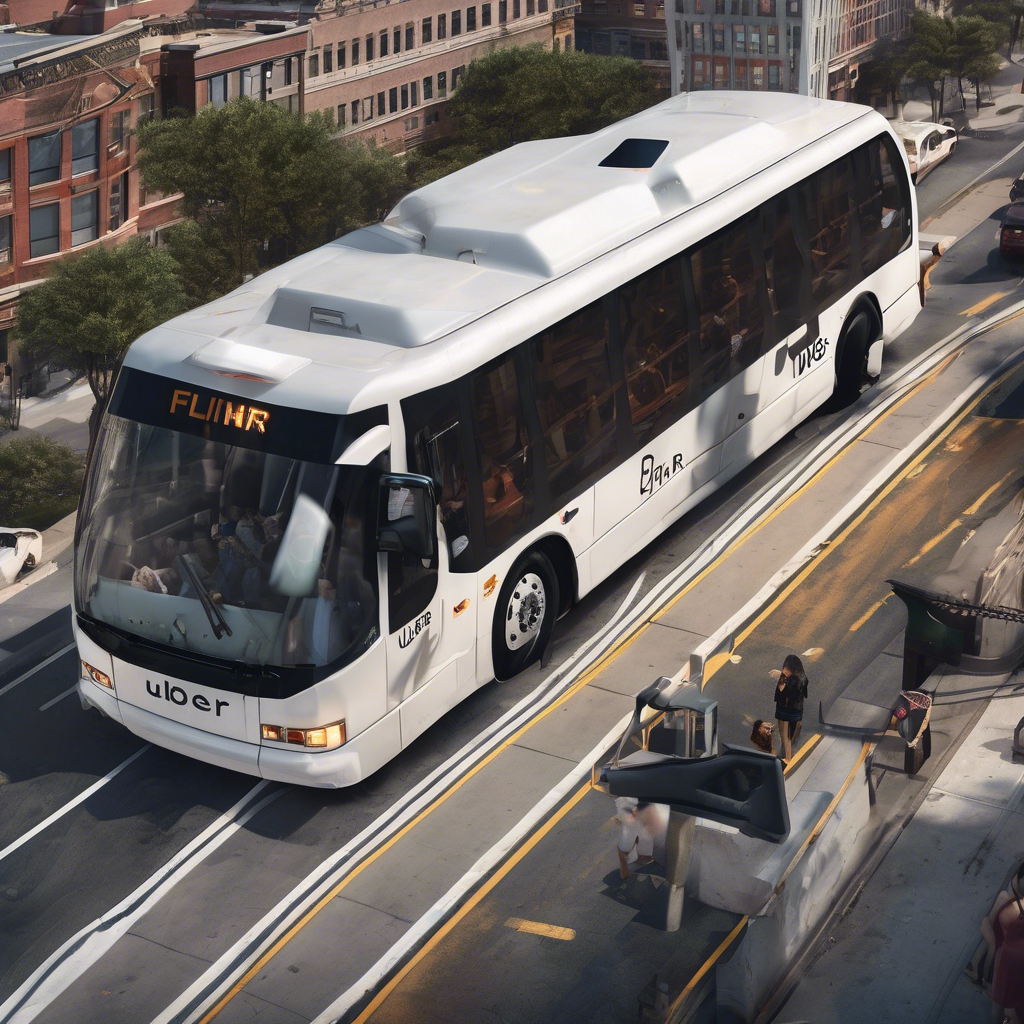
Uber’s Game-Changer: Fixed-Route Shuttles Set to Transform Urban Commuting
In a bold move that is poised to redefine urban commuting, Uber is launching a new fleet of fixed-route shuttles in major U.S. cities. This strategic shift aims to provide affordable and reliable transportation options tailored to the needs of daily commuters, bridging gaps in public transit while simultaneously addressing the increasing demand for accessible and efficient urban mobility. 🚍✨
As cities grapple with growing populations and congested roadways, the urgency for innovative public transportation solutions has never been more apparent. Traditional transit infrastructures are often overwhelmed, leaving commuters with limited choices and long wait times. Uber’s fixed-route shuttles promise a game-changing alternative that could streamline the daily grind for many urban dwellers.
Navigating the Urban Landscape: A New Approach
Uber’s fixed-route shuttles resonate with the increasing calls for public transportation reform. Designed to operate along pre-defined routes during peak commuting hours, these shuttles offer predictability—something that has been sorely lacking in the current ride-sharing model. Each shuttle will run on a consistent schedule, providing commuters with an alternative that combines the responsiveness of ride-hailing with the reliability of traditional public transit systems.
“In many major cities, the existing public transit networks fall short of meeting the needs of residents,” says Sarah Thompson, a transportation analyst at the Urban Mobility Institute. “Uber’s initiative not only expands options but reimagines how we can enhance urban mobility for everyone.”
The Numbers Speak: What the Data Shows 📊
Recent studies reveal that an alarming 72% of U.S. commuters express discontent with their current transportation options, with many highlighting long commute times and inadequate services. According to the U.S. Census Bureau, the average American spends over 26 minutes commuting each way, with urban areas facing even steeper averages. Uber’s initiative provides a promising solution for a staggering number of professionals who are seeking efficient transit alternatives that not only save time but also reduce the overall carbon footprint. 🌱
Furthermore, data indicate that Uber’s ride-sharing services have already facilitated nearly 5 billion rides since their inception, underscoring the company’s established expertise in the mobility sector. With the introduction of fixed-route shuttles, Uber aims to attract a new audience of commuters who value the efficiency of public transportation without sacrificing the conveniences of contemporary ride-sharing. 🚗💨
Addressing Concerns: The Future of Public Transit 🚦
Despite the potential benefits, the introduction of fixed-route shuttles raises various questions regarding safety, accessibility, and operational efficiency. Critics have voiced concerns about whether Uber can effectively integrate this service into existing transportation networks without exacerbating issues like ride-hail congestion and urban sprawl.
To tackle these challenges, Uber plans to implement stringent safety protocols and engage with city officials to ensure seamless integration. The shuttles will be equipped with advanced safety features and real-time tracking for riders, accommodating diverse demographic needs and enhancing user confidence in the service.
A Sustainable Future: Committing to Green Transportation 🌍
In addition to addressing immediate commuting needs, Uber’s fixed-route shuttles aim to reduce the environmental impact of transportation in urban settings. By adopting electric shuttle vehicles, Uber aspires to cut down on greenhouse gas emissions and promote sustainability in metropolitan landscapes. As cities increasingly focus on reducing carbon footprints, this green initiative aligns with broader public policy goals aimed at combatting climate change.
The Road Ahead: Shaping Urban Mobility 🔮
Uber’s foray into fixed-route shuttle services indicates a significant shift in its business model, emphasizing public transit integration alongside its existing ride-hailing services. As cities begin to embrace innovative solutions aimed at revamping transportation networks, the effectiveness of Uber’s shuttle initiative will largely depend on its ability to adapt and respond to commuter demands.
In a world where urban mobility is crucial for economic growth, equity, and environmental sustainability, Uber’s bold foray into fixed-route shuttles sets the stage for a significant metamorphosis in how we think about and experience commuting in major U.S. cities. As these changes unfold, one thing remains clear: the future of urban commuting is both exciting and promising. 🚀


