
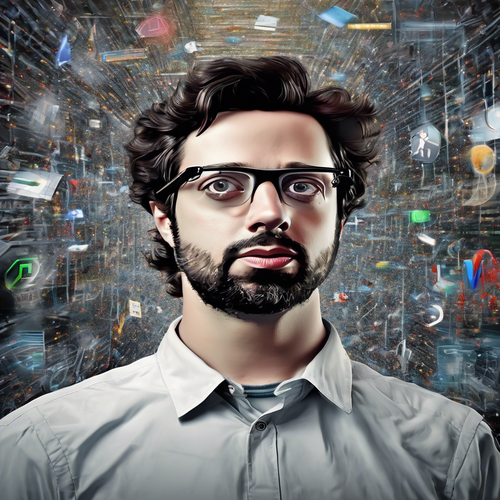
Through a Lens: Sergey Brin’s Google Glass Missteps
“I made a lot of mistakes with Google Glass.” This frank admission from Sergey Brin, co-founder of Google, echoes through the halls of tech history. It’s as if he were standing before a mirror, peering not only at his reflection but at the ambitions drowned in a tidal wave of social backlash. What seemed like a leap into the future became an unceremonious plunge into public skepticism and ridicule. 🥴
Brin’s candidness invites us to ponder: In the vast cosmos of innovation, how do we reconcile visionary ideas with the often turbulent currents of societal readiness? As he revisits the so-called “smart glasses” project, we find ourselves navigating the paradox of technological potential versus social acceptance.
The Vision and the Backlash
In 2012, when Google Glass first catapulted into the spotlight, it promised a world replete with seamless connectivity—like a digital window into the universe, poised to extend our reality. The vision was akin to stepping into a science fiction novel where one could glance at directions mid-stride or send messages with nothing more than a whisper. It was a bold attempt to redefine interaction, much like a painter dabbling in radical hues, eager to challenge the traditional canvas. 🎨
However, the reality was far less idyllic. The public’s stunned reception often juxtaposed enthusiasm with outright disdain. Google Glass became synonymous with surveillance and social faux pas. Like a pair of bright pink front-row seats at a somber opera, it distracted more than it enhanced; the irony wasn’t lost on anyone. As wearers garnered looks of disdain amidst suspicions of “glassholes,” one couldn’t help but notice how society wasn’t ready for this level of intrusion, however innocuous the intent.
The Technology and Its Social Shadow
The phrase “wearable technology” now conjures images of sleek smartwatches or fitness trackers, devices that enhance our lives without drawing undue attention. In contrast, Google Glass screamed for attention—an obtrusive declaration rather than a subtle conversation. This striking antithesis between evolution and acceptance is stark: while technology races ahead, society treads carefully, often clutching its collective pearls at the thought of what such advancements might bring.
“The worst part isn’t even the technology; it’s the social implications we’re unprepared for,” mused one sociologist whose expertise lies in technological influence on behavior.
Lessons from the Glass
From Brin’s reflections, we glean that innovation requires more than technical breakthroughs; it mandates understanding the intricate fabric of human interaction. The path forward is often littered with missteps, like a hiker navigating a rocky trail in foggy weather. Not only must creators tread lightly, but they must also listen deeply to the murmurs of the crowd, receptive to the fears and hopes that accompany any major technological shift. 🌫️
As the dust settles on the Google Glass journey, we are left considering the broader implications of its legacy. Could it be that this misadventure serves as a blueprint for future innovations? Can we envision another technological marvel that, instead of stirring fear, becomes an accepted part of the human experience? Or will we remain forever oblivious to the lessons of past miscalculations?
A Digression: The Simplicity of a Table
Interestingly, while reflecting on Brin’s narrative, one is reminded of the humble dining table—a simple necessity grounded in functionality but laden with cultural significance. Much like technology can enhance or disrupt, a table is where families gather, connections flourish, and conversations unfold. In many ways, Google Glass and a table symbolize contrasting embodiments of human connection: one revered for its simplicity, the other criticized for its complications.
The Road Ahead
As emerging technologies evolve, the lessons learned from Google Glass must inform future attempts at weaving the personal and the digital together. The road ahead is filled with tantalizing possibilities—augmented reality applications that owe their existence to the groundwork laid by Brin and his team. Yet each new venture must aspire to do more than dazzle; it must cultivate a connection that feels both enriching and natural, rather than jarring and intrusive. 🌐
In this grand narrative of technological evolution, Brin’s journey with Google Glass stands as a poignant reminder: not all innovation is applauded, and the most brilliant ideas are sometimes met with fierce resistance. The true challenge lies in harmonizing visionary ambition with societal readiness—an endeavor that still awaits its successful resolution. Can we blend the two seamlessly in our quest for progress? Only time—and perhaps our collective willingness to embrace change—will tell.